
The 4 Books I Recommend to Almost Every Parent of a Neurodivergent Child
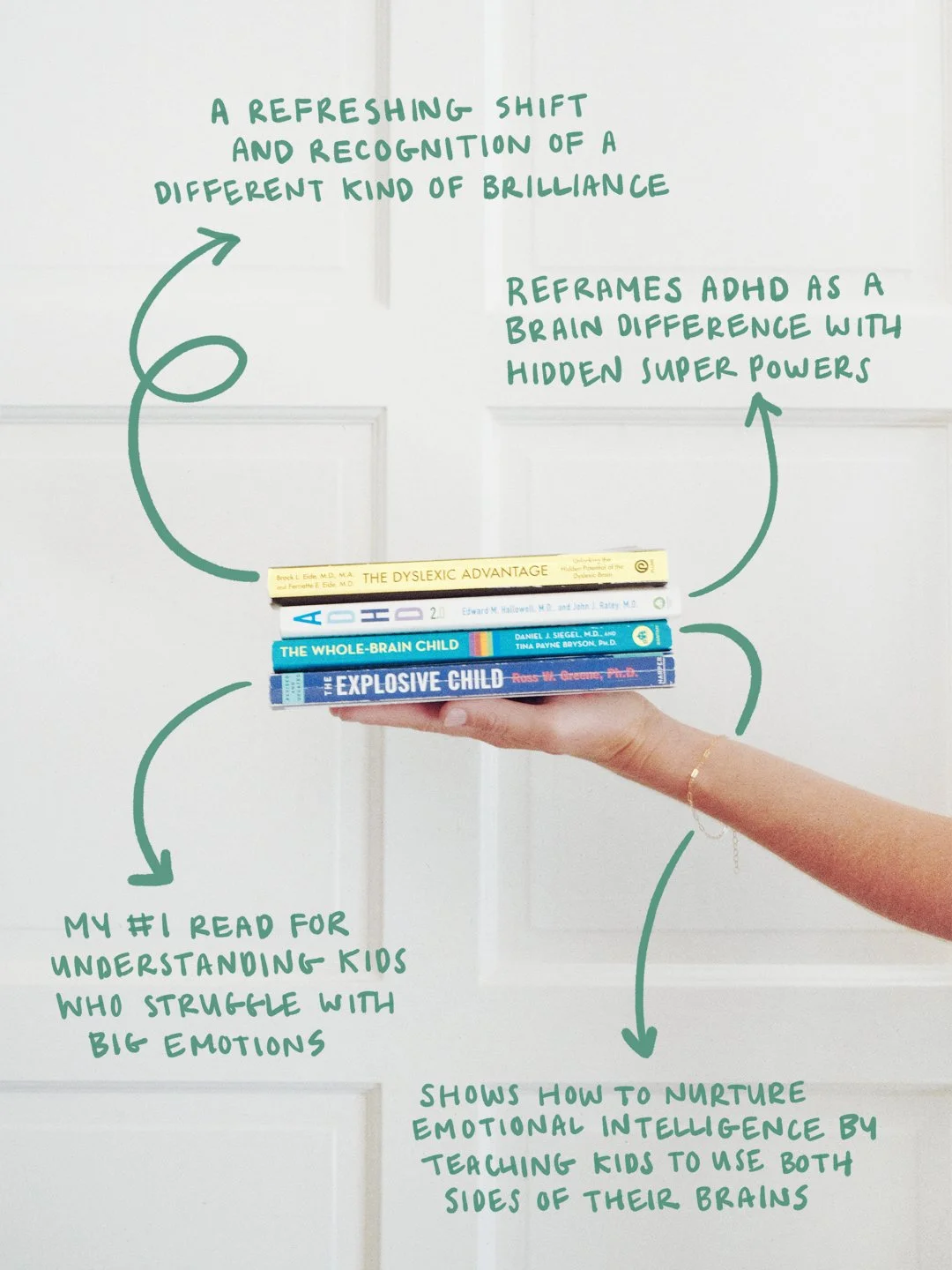
Over the past several years of working with hundreds of neurodivergent students and their families, parents often ask me the same question:
"If I could read just a few books, where should I start?"
While there are countless excellent books on ADHD, executive function, parenting, and learning differences, there are four that have fundamentally shaped the way I understand neurodivergent children. These books have influenced not only my coaching practice but also the philosophy behind The Learning Collective.
Each one offers a different lens, yet they all point toward the same conclusion:
Children thrive when we stop asking, "What's wrong with them?" and start asking, "What do they need to flourish?"
📖 The Explosive Child by Dr. Ross Greene
If I could recommend only one parenting book to a parent with a child that has a quick fuse, this would be near the top of my list.
One of the most transformative ideas in the book is Dr. Ross Greene's simple but powerful statement:
"Kids do well if they can."
This shifts the conversation away from punishment, rewards, and assumptions about motivation. Instead of viewing challenging behavior as defiance, Greene encourages us to see it as a sign that a child is struggling with skills they haven't fully developed yet.
Many of these missing skills are executive function skills, including:
Cognitive flexibility
Emotional regulation
Frustration tolerance
Impulse control
Problem-solving
Instead of asking:
"How do I make my child comply?"
we begin asking:
"What skill is getting in the way?" (this is so critical!)
That single shift changes everything.
When we identify the lagging skill instead of reacting to the behavior, we move from conflict toward collaboration. Children feel understood rather than judged, making it easier to build the very executive function skills they're struggling to access.

🧠 The Whole-Brain Child by Dr. Daniel Siegel & Dr. Tina Payne Bryson
One of my favorite concepts from this book is "flipping your lid."
Using his hand model of the brain, Dr. Daniel Siegel illustrates what happens when a child becomes overwhelmed. When stress or big emotions take over, the prefrontal cortex—the part of the brain responsible for executive function—temporarily goes offline.
That means skills like:
Planning
Working memory
Flexible thinking
Emotional regulation
Impulse control
Decision-making
become much harder to access.
This is why telling a dysregulated child to "just calm down," "think about your choices," or "use your planner" often doesn't work.
Their brain isn't refusing to use executive function.
At that moment, it simply has less access to it.
The book beautifully illustrates why connection, co-regulation, and emotional safety aren't "soft parenting." They're neuroscience. By helping children return to a regulated state, we support the brain networks that make executive function possible.
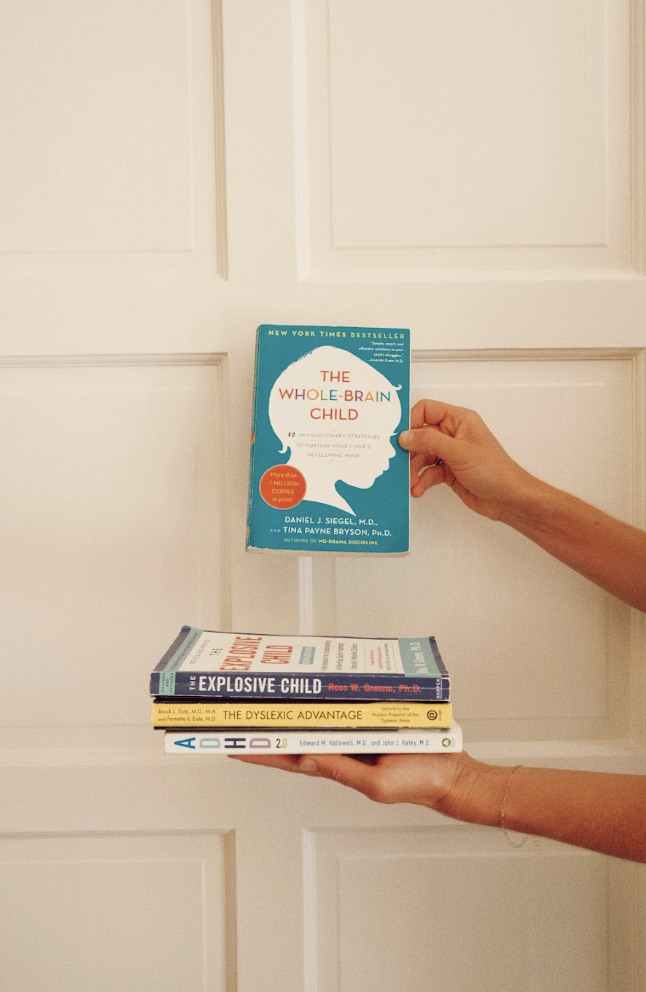
⚡ ADHD 2.0 by Dr. Edward Hallowell & Dr. John Ratey
One of my favorite messages from ADHD 2.0 is that ADHD is far more than an attention disorder.
It's a difference in how the brain regulates attention, motivation, emotion, and executive function.
Rather than focusing exclusively on deficits, Hallowell and Ratey emphasize the conditions that help the ADHD brain thrive.
They explore the powerful role of:
Movement
Sleep
Relationships
Strengths
Purpose
Curiosity
These aren't simply "healthy habits." They directly influence the brain systems involved in attention, learning, motivation, and executive function.
One of the biggest misconceptions about ADHD is that students simply need better organizational strategies.
Strategies absolutely matter.
But strategies work best when the brain has the capacity to use them.
Supporting executive function means supporting the whole brain—not just handing students another planner.

💡 The Dyslexic Advantage by Dr. Brock Eide & Dr. Fernette Eide
I recommend this book to far more than just families of children with dyslexia.
What makes it so valuable is that it reframes neurodivergence through a strengths-based lens.
Instead of asking what dyslexic learners struggle with, the authors explore the remarkable ways many think differently.
They describe strengths commonly seen in dyslexic individuals, including:
Big-picture thinking
Creativity
Pattern recognition
Complex reasoning
Innovation
Entrepreneurial thinking
For so many students, years of struggling in traditional school environments have left them believing they're "bad at learning."
This book reminds us that many of these students aren't broken.
They're often gifted in ways our educational systems don't always recognize or nurture.
My Challenge for You
If you're a parent, educator, or therapist, I encourage you to read at least one of these books this year.
Each offers a different perspective, but together they paint a much bigger picture of what neurodivergent children truly need.
The more we understand the brain, the less we rely on blame.
And the more we understand the whole child, the better equipped we are to help them thrive.
