
The 3 Back-to-School ADHD Tools I'd Buy First (and the Executive Function Skill Each One Supports)

As back-to-school shopping begins, many parents ask me the same question:
"What should I actually buy for my child with ADHD?"
There are hundreds of planners, organizational systems, and study tools marketed toward ADHD. While many of them can be helpful, I've found that the most effective tools aren't necessarily the fanciest—they're the ones that reduce the demands placed on executive function in the first place.
One of the biggest misconceptions about ADHD is that children simply need more self-control, more reminders, or more motivation.
But executive function doesn't develop in isolation.
A child's ability to plan, focus, organize, regulate emotions, and manage time is deeply influenced by their nervous system, their environment, and the supports available around them.
Rather than asking children to rely on willpower alone, I prefer tools that design the environment to work with the ADHD brain.
If I could only recommend a few purchases before school starts, these would be at the top of my list.
1. The Brick
Executive Function Skill: Inhibitory Control & Sustained Attention
One of the hardest executive function skills for students with ADHD is inhibitory control—the ability to resist distractions and stay focused on the task in front of them.
Expecting a teenager to ignore notifications from TikTok, Snapchat, or Instagram while doing homework is asking their brain to fight an uphill battle.
The Brick changes the environment instead.
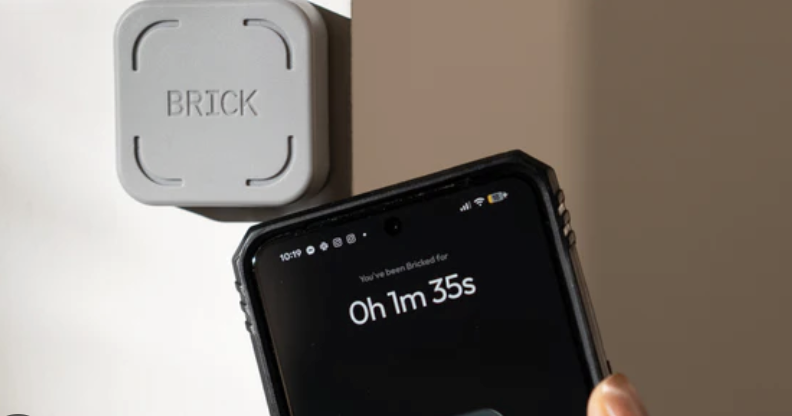
It temporarily blocks distracting apps during homework or study time while still allowing access to helpful apps like Spotify for focus music if you choose.
Instead of relying on constant self-control, it removes the temptation altogether.
This is an example of what psychologists call choice architecture or environmental design—making the desired behavior the easier behavior.
For many students, reducing distractions doesn't just improve focus. It also reduces the mental effort required to stay on task, leaving more cognitive energy available for learning.
Executive Function Skill: Time Management & Planning
Many students with ADHD experience what's often called time blindness.
Time feels abstract.
Five minutes and thirty minutes can feel remarkably similar.
This makes estimating how long homework will take, transitioning between activities, and getting out the door on time incredibly challenging.
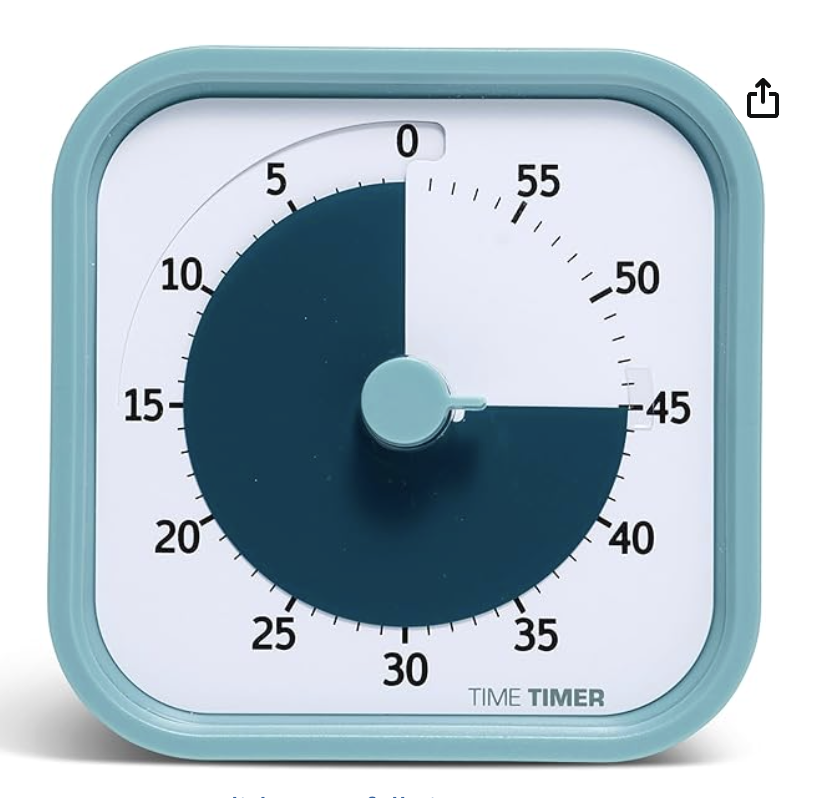
A Time Timer makes time visible.
Instead of watching numbers count down, students can actually see time disappearing.
This simple visual cue helps them:
Estimate task duration more accurately
Improve transitions
Build awareness of passing time
Develop stronger planning skills
Over time, students begin developing a more accurate internal sense of time—a foundational executive function skill they'll rely on throughout school and adulthood.
3. NeeDoh
Executive Function Skills: Attention Regulation & Emotional Regulation
Not all fidgets are created equal.
NeeDoh is one of my favorites because it's a resistive fidget, meaning it provides deep pressure—or proprioceptive—input through the hands.
Many of my ADHD students naturally reach for this type of sensory input while they're working.
Why?
Because sensory input doesn't just occupy busy hands.

For many children, it helps regulate the nervous system while engaging the brain's attention and reward networks.
When students are more regulated, they're often better able to sustain attention, tolerate frustration, and remain engaged during homework.
Rather than viewing movement or fidgets as distractions, I encourage parents and teachers to ask:
"Is this helping the brain regulate so learning becomes more accessible?"
Often, the answer is yes.
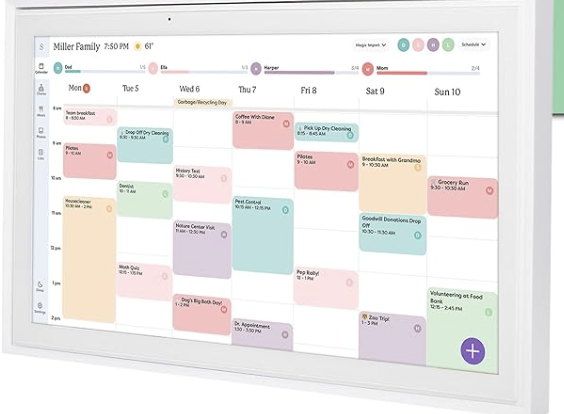
4. BONUS…My Splurge Pick: Skylight Calendar
Executive Function Skills: Planning, Organization & Working Memory
If there is one executive function skill I see impacting families every single day, it's working memory.
Students with ADHD are often expected to remember:
Homework assignments
Upcoming tests
Soccer practice
Band rehearsals
Appointments
Family events
Deadlines
School projects
That's an enormous cognitive load.
Instead of expecting children to keep all of that information in their heads, a shared visual family calendar externalizes working memory.
Now everyone can see what's coming.
This reduces forgotten assignments, last-minute surprises, and the constant need for parents to become the family's reminder system.
Even better, it gives students repeated opportunities to practice planning ahead, checking their schedule, and gradually taking greater ownership of their responsibilities.
The Bigger Picture
While I love all four of these tools, none of them are magic.
They work because they reduce executive function demands while supporting nervous system regulation.
That's an important distinction.
We often think executive function comes first—that children need better organization before they'll succeed.
In reality, the opposite is often true.
When a child's nervous system feels safe, regulated, and supported, executive function becomes far more accessible.
That's why I always encourage families to think beyond strategies alone.
Instead of asking,
"How do I get my child to be more organized?"
we can begin asking,
"How can I design an environment where organization, attention, and planning become easier?"
Sometimes the most powerful intervention isn't teaching another strategy.
It's changing the conditions in which that strategy is expected to happen.
Those conditions matter.
And when we support them, executive function has the opportunity to flourish.
